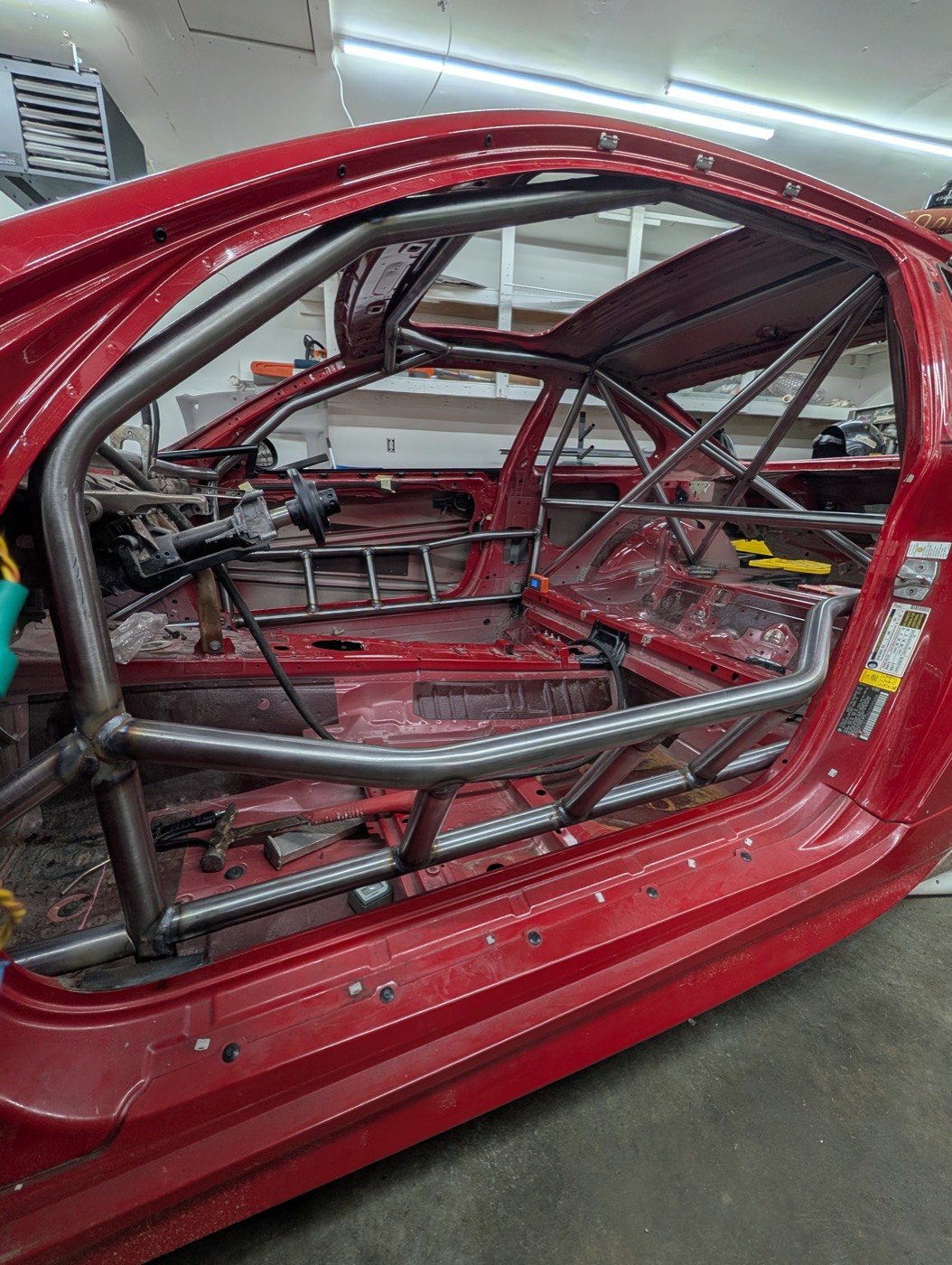
- Chassis
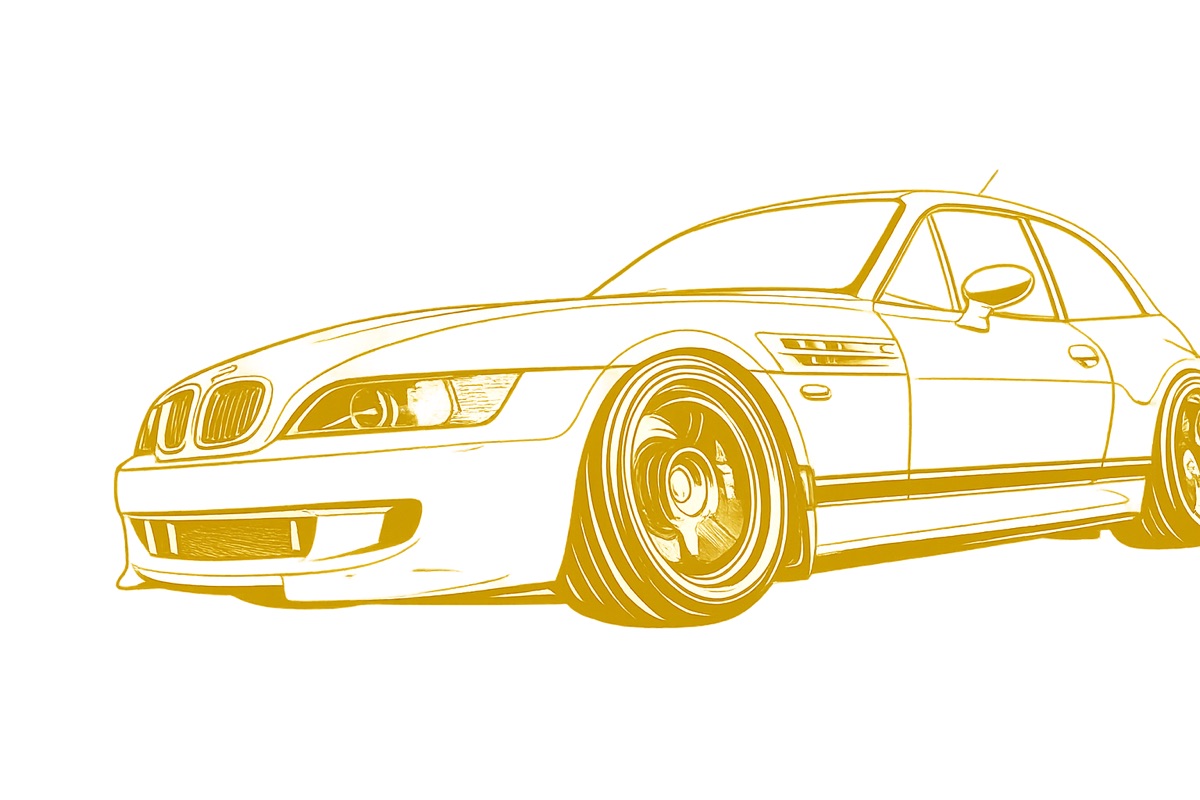
- BMW E90
- Scope
- Cage · scanned, designed, built
Custom roll cages · Minnesota
Your shell is 3D scanned first, and the cage is routed against that scan before a tube is cut. What gets welded in was drawn for your chassis, not adapted from somebody else's.
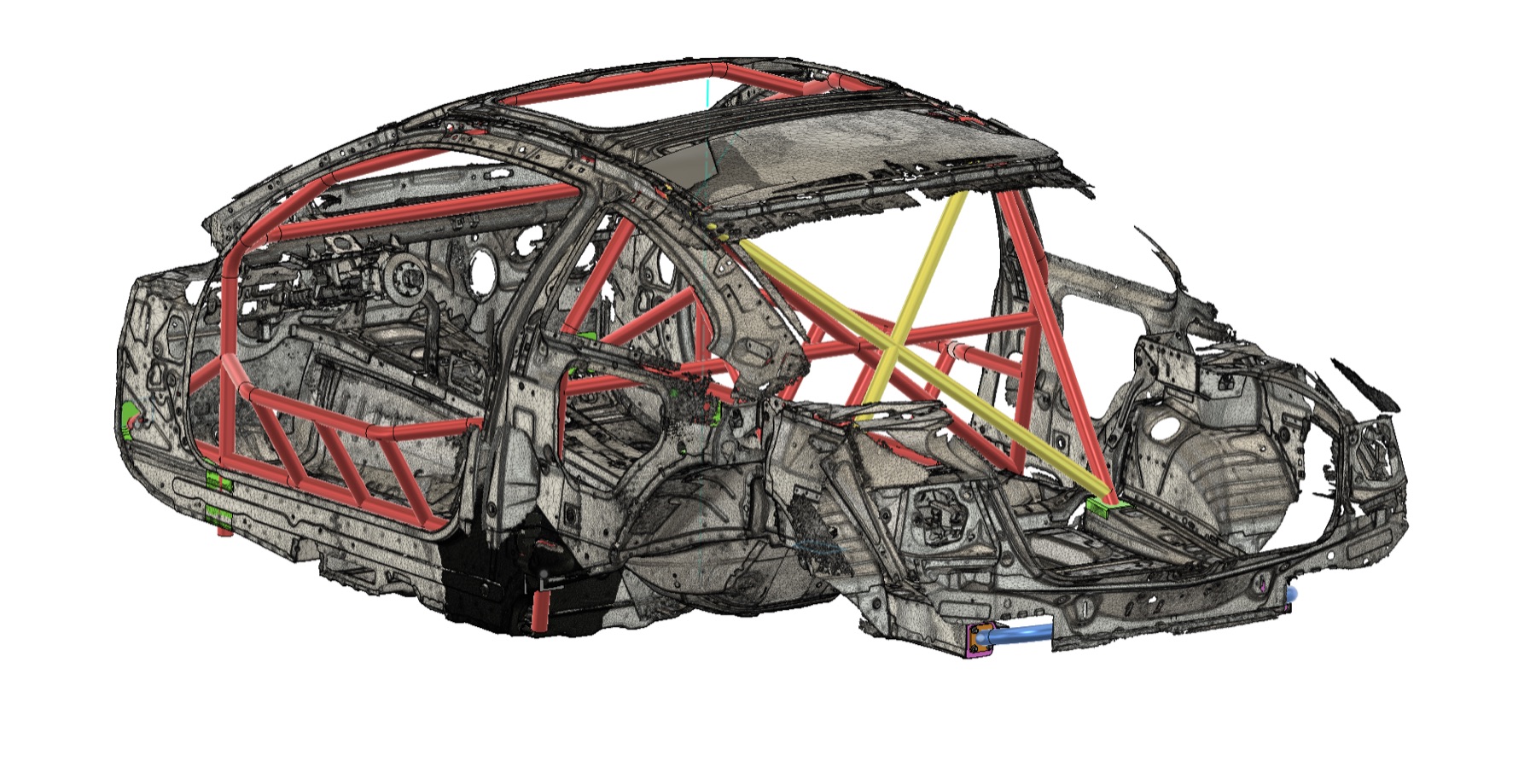 View B · As built
Process
No two shells are identical, even the same model: seams, pillars and old repairs move things. So the cage starts from a scan of your car.
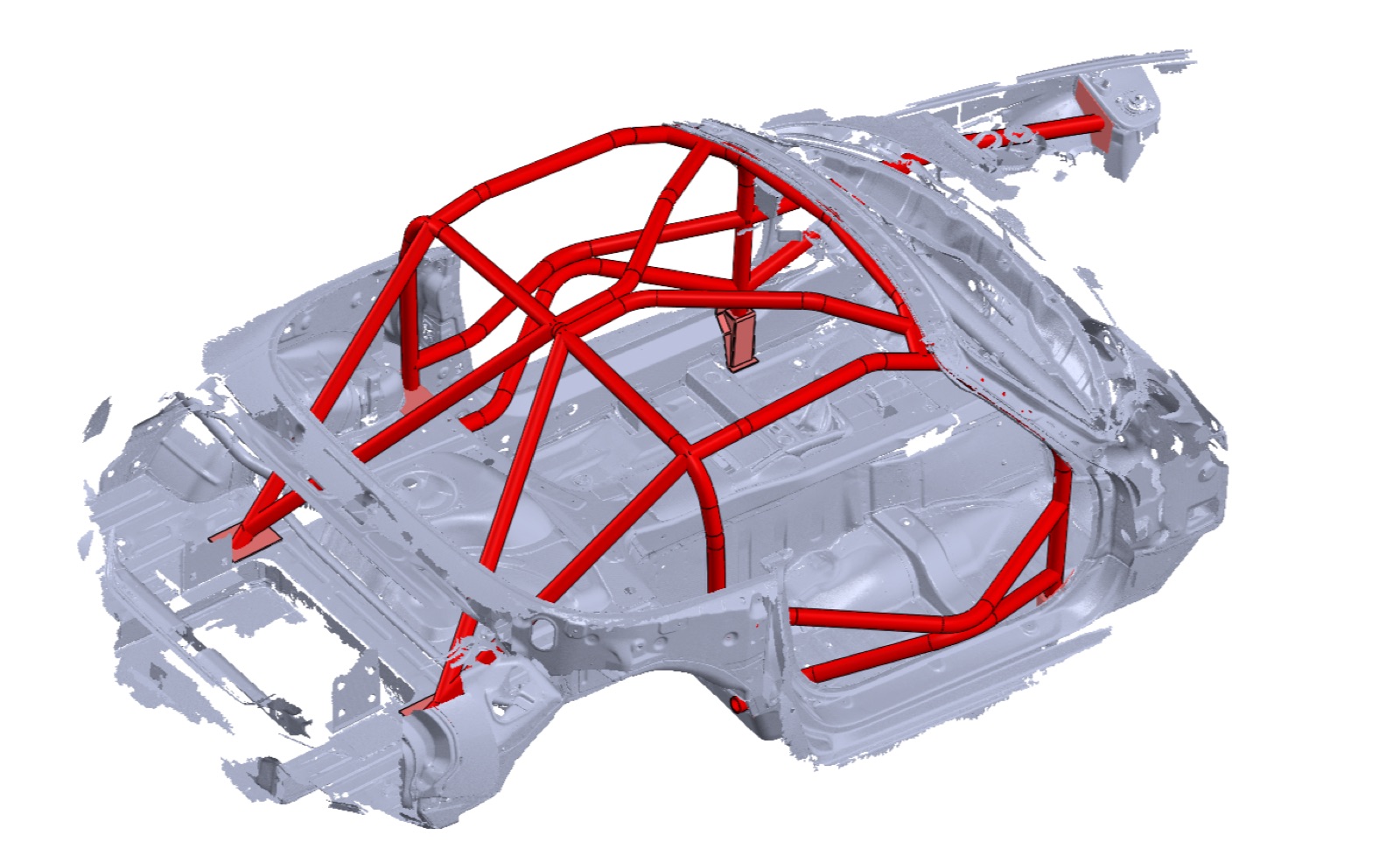
The stripped shell is 3D scanned, pillars, floor and roof rails included, before any tube is bent.
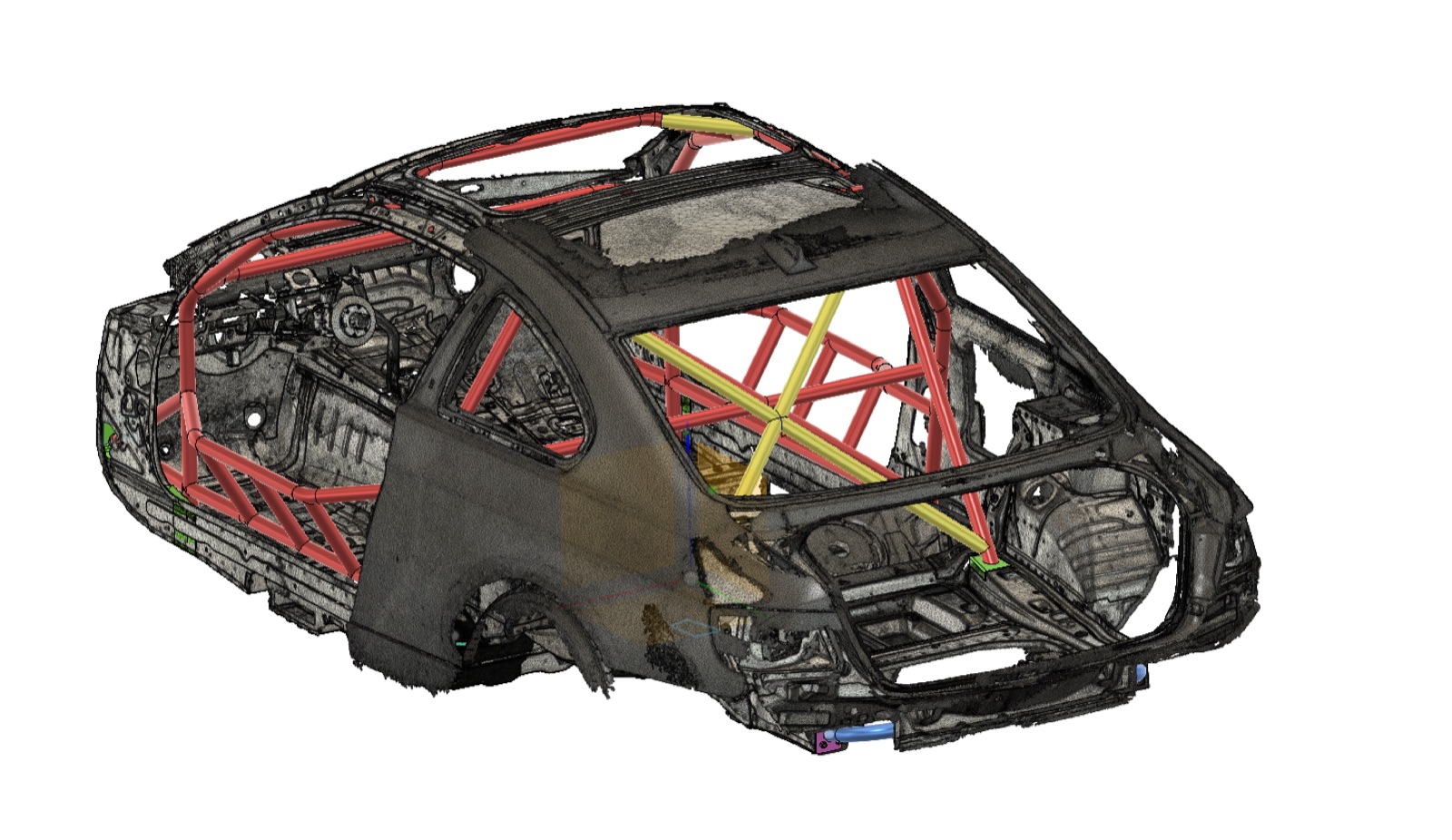
The cage is routed in CAD against that scan: tie-in points, door bars, seat and helmet clearance, in DOM or chromoly to suit how the car is used.
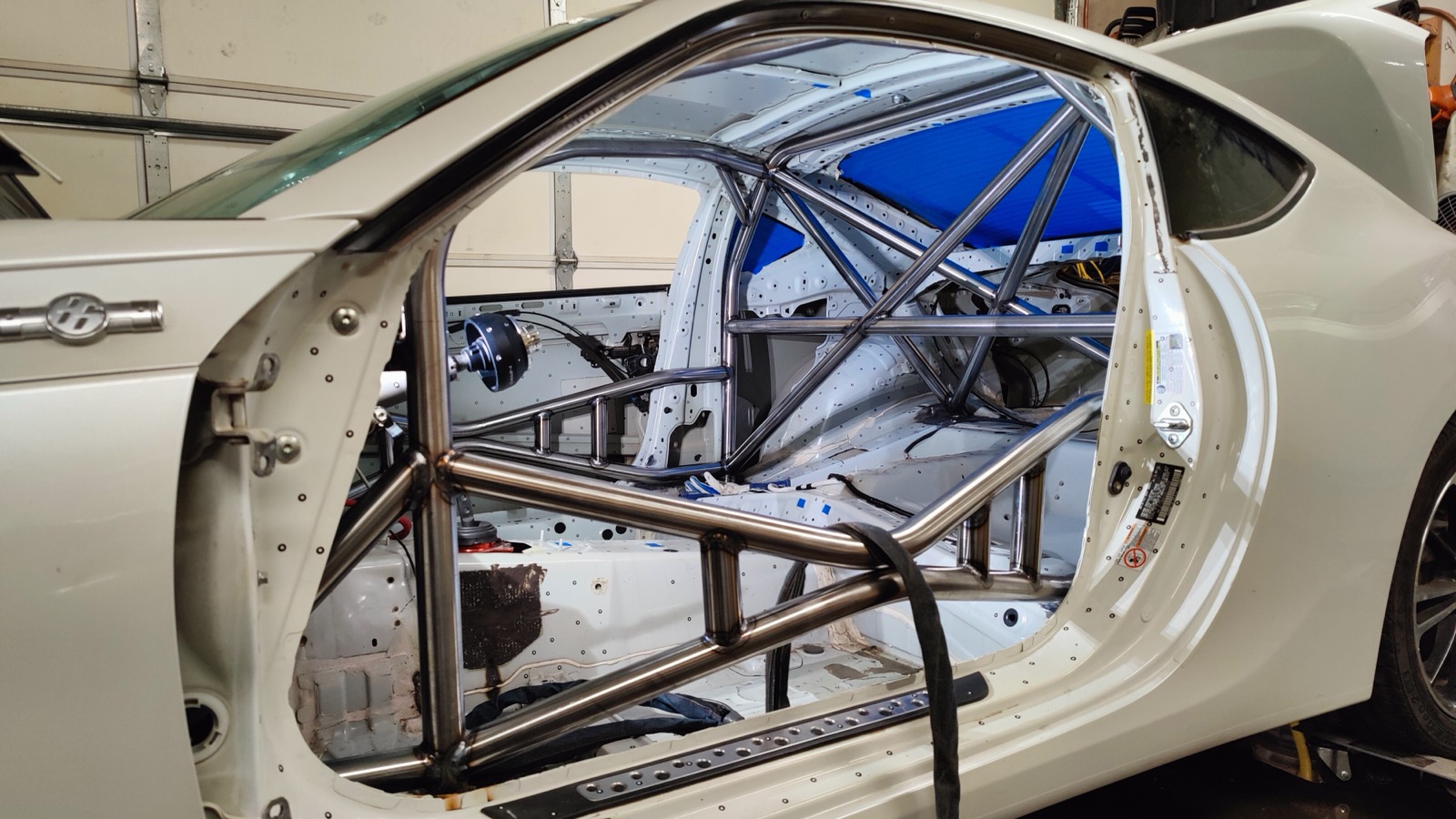
Tubes are bent and welded to the model, so the cage lands where it was drawn: tight to the body, clean joints, built to your class rules where they apply.
Work
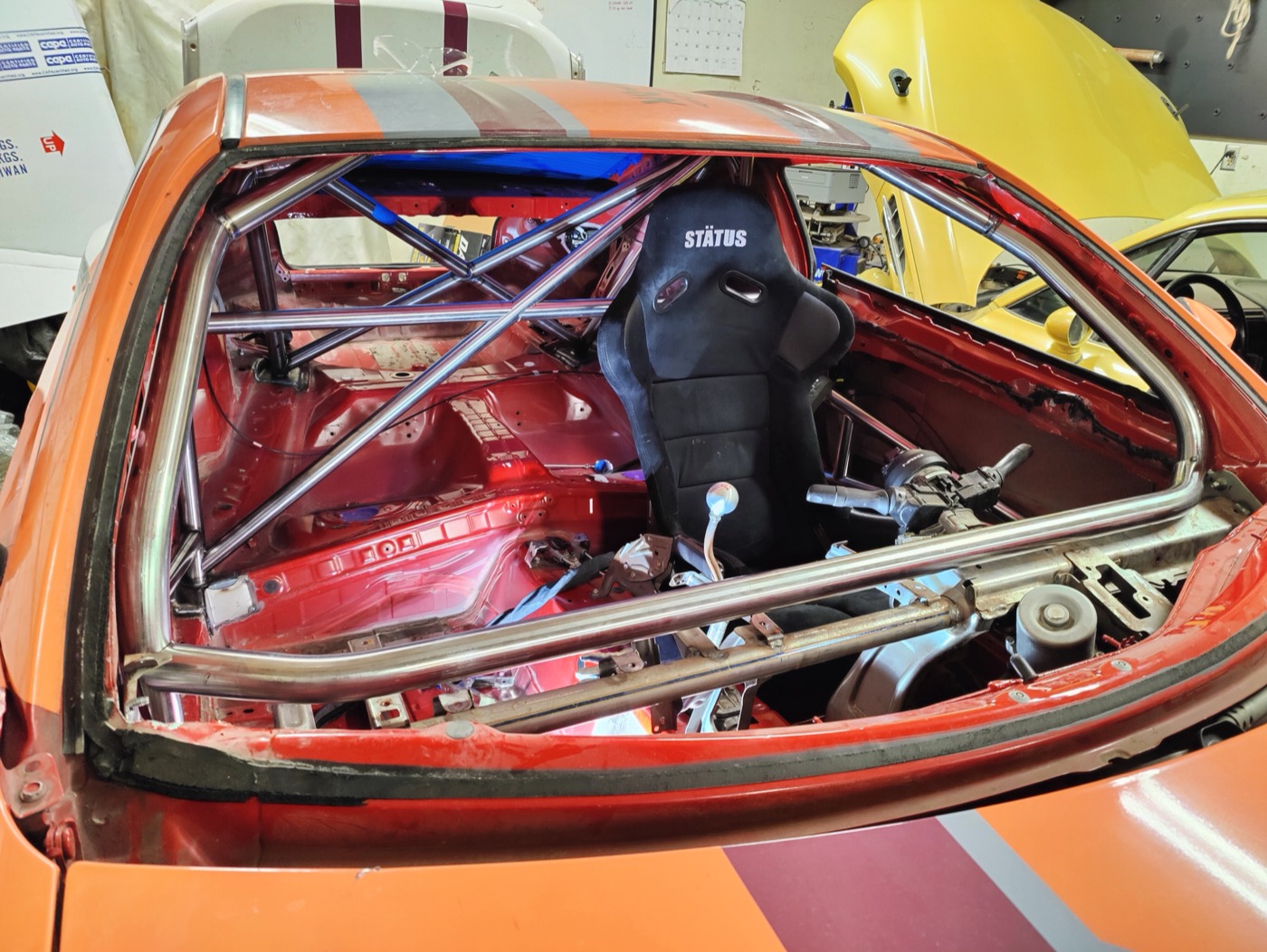
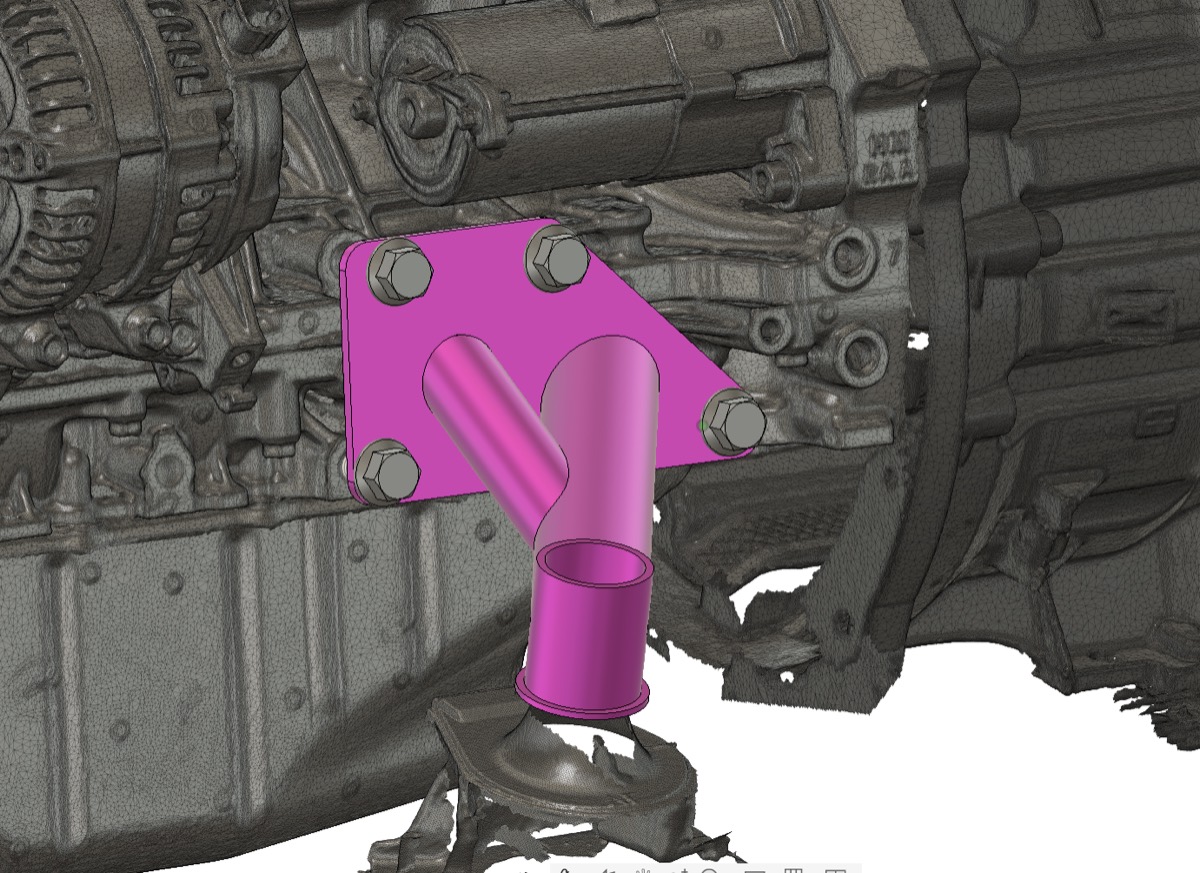
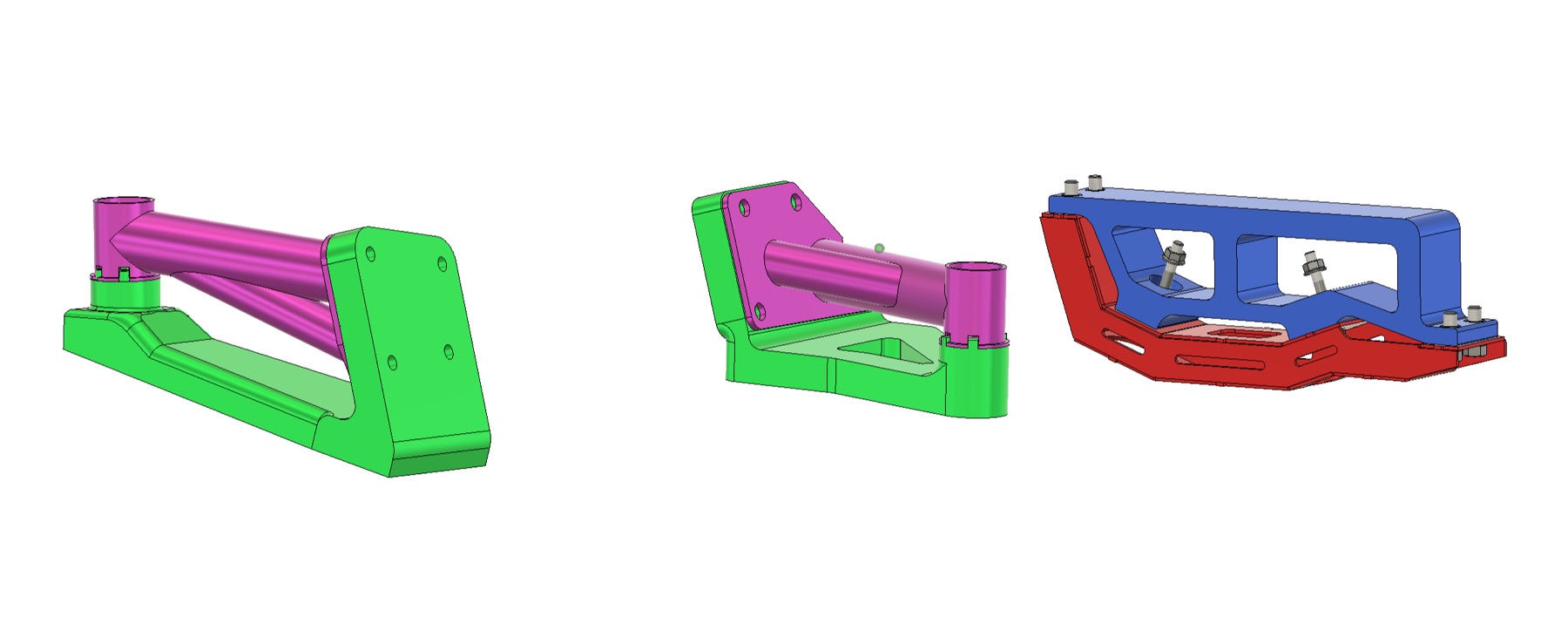
Cages going in, scans, and the cars once they're finished.
See @artsemfabAbout
Artsem is an automotive fabricator, welder and builder: roll cages, chassis work, performance modifications and one-off parts. His rule is that every cut, bend and weld should serve a purpose, and look right doing it.
Scanning and 3D design are how he holds himself to that. Fitment is settled on the model, so the shop time goes into building it well.
Pricing
The numbers up front, so you know where your build lands before you ask.
| Shop rate | $125 per hour |
|---|---|
| Cage, MIG welded | $6,000–8,000 typical |
| Cage, TIG welded | $10,000–12,000 typical |
TIG takes longer per joint, which is the difference between the two. Where your cage falls in its range depends on the chassis and the design.
Request a build